
The fight for brand and product futures is increasingly buried in slop-moderne.
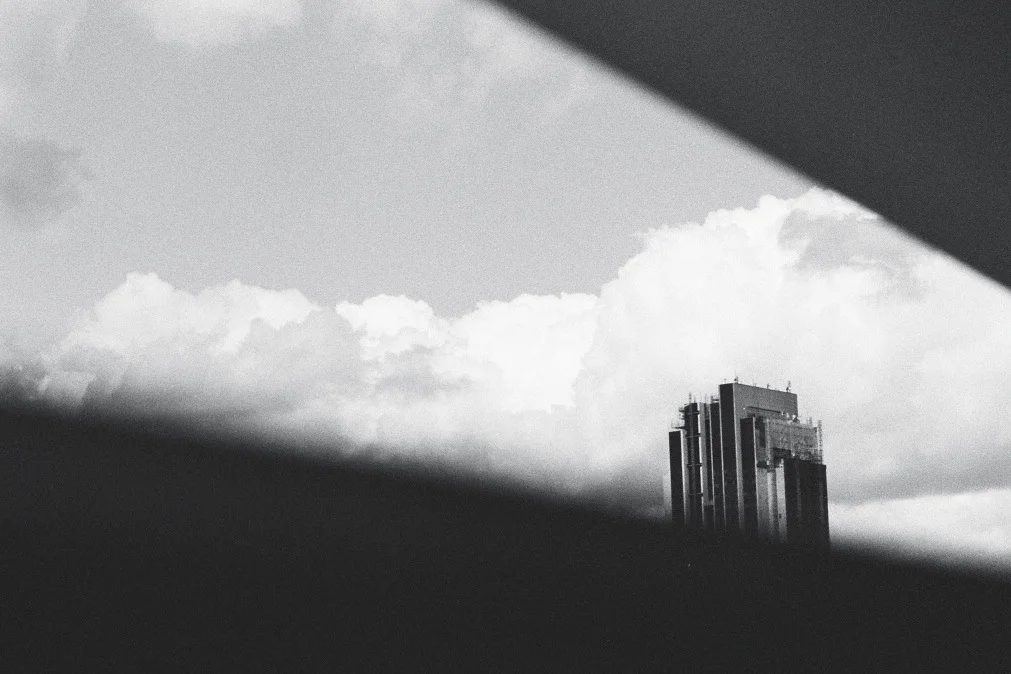
In 2015 I was invited to contribute to a design criticism project curated by &&&, the creative team behind OMA/Rem Koolhaas’ CONTENT. What is fascinating about CONTENT, and what makes it so influential, is its call for the creator to refocus on intellectual property and cultural research, deeply rooted in ‘Dirty Realism’. ‘Dirty Realism’ is the chaotic humanity that fills spaces, those spaces rooted in ‘Junkspace’ - Koolhaas’ included seminal essay on the cultural fall out from global capitalism and sprawling modernization.
This essay started as a keynote titled ‘Facebook killed your Designer’, but it has evolved over the years, specifically with the advent of AI and the entrenchment of Design Systems. It tries to use architecture, consumption and excessive venture-backed corporate capitalization as a vehicle to explain and discuss the complex shift in Design practice that has happened between 2014 and today.
OMA’s CONTENT was published in 2004 into a world where globalization had made architecture a target in complex geo-political earthquakes. The rise of ‘bigness’, the unusable, exponential vastness of modern uncapped sprawl, the targeting of spaces through political and religious terrorism, the balance of structures swinging East away from North America; a sense of global sea change diversifying political power through increasingly borderless venture capital and corporate structures.
What CONTENT and Junkspace predicted inadvertently was the change in Design as a practice, and the rise of global productization. ‘Bigness’, the theory of exaggerated size resulting in the abandonment of societal norms and expectations, exponentially explodes into Junkspace through ego and capital injection to become sprawling, unmeasurable and untameable space. It is driven by efficiencies and the cheapness of technologies; the sheetrock allows vast surfaces to be quickly erected, the escalator enables large vertical changes to be mapped and routed, the air-conditioning marries its interior vastness with consistency and comfort. There is no limit to its exponential growth because the sub-systems that combine to enable Junkspace are equally exponential. Those sub-systems themselves are driven towards their own endless efficiencies.
Koolhaas predicts that the exponential growth of Junkspace is limitless to the point that the infrastructure of seamlessness can reach - that is to say the point whereby technology can support it. But Junkspace has another hard limit - consumption. Junkspace exists to support the dimensions required for consumption, and therefore consumer brands. When Junkspace fails it is because the space can no longer support the consumption that powers it. It is the inherent behaviour of Junkspace that it exponentially grows and self-facilitates until the point that the mass-consumption it enables, ultimately collapses.
Junkspaces are not superstructures. Koolhaas is very clear in the failure of superstructures and permanence in the face of encroaching Junkspace. In Junkspace, the frameworks that maintain superstructures collapse, and are replaced by the superficial, the temporary and the impermanent. Large, established superstructures, once tuned to singular narrative, look and feel are superseded by provisional iterations of immediate need; modular additions adhered to a mass of sub-systems that collectively lack a vision, ideal or centralized philosophy. The lack of superstructure means the Junkspace is unconfined and it sprawls in any direction consumption enables it. It is a malleable blob that morphs on consumptive demand, fed by capital and technological efficiency, glued and stapled together in real time, just in time, with little connective thought, vision, consideration or cohesion.
By 2015, Facebook had begun moving from established superstructure to a collection of sub-systems, and in the process of unbundling had begun the act of mass-productization. Facebook at the time was the largest superstructure online, and this year saw the productization of Messenger, News and Live Video. It was moving fast and breaking things. The permanence of a singular connective network interface was undone, unbundled into disparate, iterative sub-systems. Google had unbundled in both sub-system and corporate architecture. It had restructured under Alphabet, dismantled Google + and begun the unbundling of Documents, Sheets, Photos and Storage into Google Apps for Work. These sub-systems were made possible through the 2014 launch of Google Material Design, an efficiency that unified the sub-system language. Material Design formed the basis of a new unified approach to productization. It rejected variety, instead generating conformity through efficiency. Individual vision was replaced with an iterative approach aligned to consumption metrics.
Both of these unbundling moves were not by their nature bad. They cannot be judged as overly consumptive, or as the first stages of the unravelling of established Design. More they show the inevitable move towards an efficiency led by global consumers and capital. They are, in many ways, reactions, or the fallout of technological modernization and efficiency. They are also early indicators of the inherent threat to truth and ethics that comes from the exponential sprawl that feeds on consumptive demand.
The smartphone explosion post-2007 elevated UX Design as corporate strategies began to aggressively and belatedly align to SO-LO-MO and the experiences being designed were increasingly optimized for the iPhone. The introduction and mass-adoption of Ethan Marcotte’s Responsive Web Design formed a foundational sub-system on which design and experience could be exponentially delivered. 2015 defines the rise of mobile as the primary standard, driven by data packet technologies.
Design reacts to this in an interesting way. Based on the early usability tenets set by Jakob Nielsen, Design began to apply vision through cognitive psychology and ergonomics. These frameworks and ‘ways of working’ were objective and largely neutral, existing in academic literature more than Design discussion. The malleability of cognitive psychology, initially used to shepherd users to their intended destination was slowly corrupted towards darker patterns. A big part of the darker pattern appearance was attributed to business optimization. Koolhaus warns of this as the nature of sub-systems, variously reactive to the consumption that feeds it growth, using spatial influence to manipulate and distort for financial gain. If the sub-system is entirely reliant on consumption for its existence, then the sub-system should, by its nature, become manipulative towards its own survival.
Design’s reaction was a philosophical split. One must choose to either chase the direct business metric and behaviours that determine the spaces own survival, risking that by doing so the space created may morph into a place of unethical subsistence; or become advocate for the ‘user’ within the sub-system, act as their protector, and carry the fiduciary duty to protect the unknown user within the space created.
This ethical approach was reactionary to the tension that began to build in the junkspaces. But it was a reaction that was pre-dated to a time of superstructures and singular visions; of brand values and high-water marks. The Designers were not aware of their involvement in the junkspace sprawl, nor were they aware that they were acting as a protector in an unmoored space whose nature of being was survival above all else. The rising tension of this period was a series of conflicts that pivoted to the extreme where the global corporate demand for exponential metrics at all costs, a logical demand based on the junkspaces that now proliferated, was met with the resistance of informed consent. In many ways you can claim that the designer-as-protector won this high-level conflict through governmental regulation - GDPR, PIPEDA. But the quiet reality is the Designer largely understood, despite professional protestations, that the nature of the spaces that were now ubiquitous demanded fealty to the spaces self-existence. If the space did not, or could not exist, if it could not exponentially expand and meet the consumable needs it co-enabled, then the Design itself - and the Designer by proxy - was waste. Accessibility, ethics and transparency in reality did not really matter that much. They could be side-stepped, ignored and rolled over in favour of consumption. If the traction was high, then the Design did not have a massive effect. The Design was now about optimizing the consumption and defending it.
The Designer was from then on judged on their ability to enable exponential consumption. Again, this is not a ‘bad’ thing. It is objective. It is the inherent nature of the systems built. It is also the tension that exists in Design more generally - that the core focus of Design is to enable consumption. It is to sell things. What the Junkspaces forced was a reckoning not only to the core ID of the Designer, but the movement towards the Designer as the enabler of exponential consumption. Exponential consumption requires sacrifices - aesthetic, perhaps. Budgetary, yes. But also the end-goal of reduction, efficiency, optimization and ultimate insignificance. The Designer facing insignificance, effectively undermining their own ID, becomes the natural end-state.
As the sub-systems become aware of their own needs relating to their own survival, the role of the Designer diminishes. Design systems take over, patterns are reproduced, paths replicated. The Designer’s role then is to tend the garden, not plant and harvest it seasonally. To that extent, the Designer’s role moved towards curation. In Junkspace, disparate sub-systems co-exist, self producing their own growth, tied to consumption. These systems are naturally unbundled - they demand to be unbundled to maximize their ability to iterate, mutate and adhere to consumer behaviours. The Designer, the overarching gardener, does not interfere with these sub-systems unless absolutely necessary, lest they create underconsumption and threaten the sub-systems existence. If they intervene, they do so with mass-testing, mass-metric review, mathematical scrutiny and a complete avoidance of risk. Theirs is a role of optimization, but it is a role of nudges and micro movements, of study and defensible hypothesis. Creativity instead now comes to the Designer through curation - the narrative, the aesthetic, the perception of the sub-spaces they tend. This is because in Junkspaces, the sub-systems are not interconnected. They must co-exist, but they must be free to self-correct. Curation then becomes the fibre that stitches the brand together, the meaning, the self. This human level contains adjustments and tests related to human perception and societal temperatures. It defines and updates the design systems that run the sub-systems, that fuel the consumption. The Designer is an operator that binds human principles and desires to a sub-system activity.
AI disrupts this process. If the sub-systems are not interconnected, AI can connect them. If the curation is effective for sub-system discovery, AI bypasses this and delivers the sub-system directly to the consumer at the moment of consumption. If the design systems require management to generate cohesion, the AI alters the systems personally for each consumer to maximize that sub-systems exponential potential. Junkspace in the world of AI is a collection of brilliant, perfect sub-systems that at its sum is utterly meaningless. AI makes these sub-systems seamless depending on intent. It maps between them based on activity, desire, intent or location. It finds the shortest, highest consumption path to every required outcome, and it does it exponentially itself. It becomes the logic engine for a disparate space, bypassing curation with speed, moving Junkspace to its absolute logical extreme. The sub-systems we create, design and curate become truly post-human, equally comfortable with consumption both human and bot. Slop increasingly becomes the binder, systems the identifier, curation now relegated in favour of immediacy, a perceptual risk of friction. In Junkspace, the Architect ultimately loses the ability to apply a vision upon the amorphous, mutating sub-systems and must abandon their vision and control. So too must the Designer.
So what of the Designer? Junkspace predicts the eventual end-state. But that end-state is not human. The Designer exists to humanize societal desires, needs and wants. To apply a human layer upon the machinations of geography, commerce, consumption, drive and want and to do so in a way that respects the humanity of those who interact with it. This respect renders in different ways, but it is grounded in truth and trust. As the sub-systems devolve into mass-consumption loops, and as AI delivers them with machine efficiency, truth and trust is eroded. The uncanny valley of machination is creating hierarchies of human curation, human ethics and human aesthetics. This is not unexpected. The nature of Junkspace is to mine the extreme with immediacy, which is counter to the human desire for time, trust, expertise, imperfection and imagination. This places the Designer as the vanguard of the future while AI-juiced Junkspace endlessly mines the past, forever seconds behind, forever missing the bigger picture, forever missing the human layer.
The Designer is not the one who dissolves and dismantles Junkspace. Junkspace will always exist. But rather the Designer is the human alternative - an alternative that will always supersede in some crucial way the junk and the slop, and provide a human alternative that will soon enough become a more desirable avenue of an era of the dirty reality of neo-consumption.